A till that works without a network
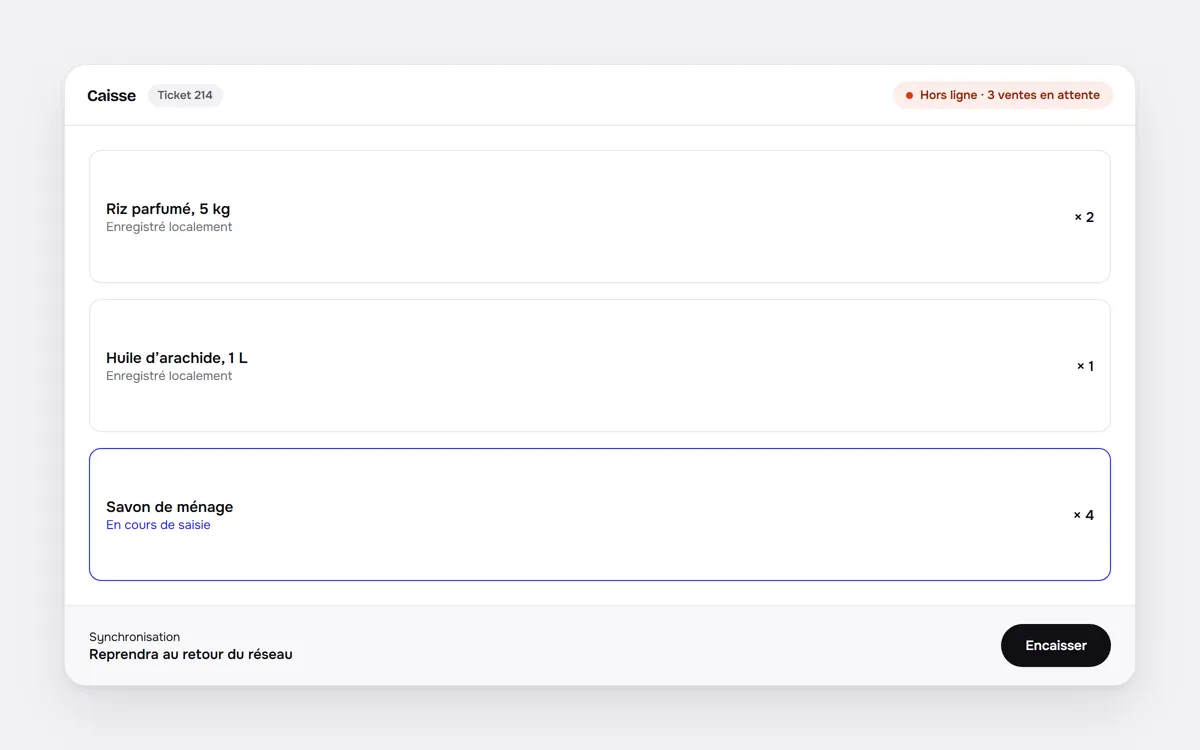
A studio exploration, with no client behind it. When the line drops mid-service, ordinary till software freezes the screen and the shopkeeper goes back to the notebook. This concept starts from the opposite assumption: the sale is recorded on the device first, and the network only ever catches up.
This project is an internal studio exploration. It was not commissioned by a client and has not been deployed.
Context
A neighbourhood shop takes payment at the busy hours, not when the line feels like working. Most till software still assumes a permanent connection, so the smallest outage lands at the worst possible moment, with the queue growing.
Challenge
Treat having no network as the normal state rather than a fault to report. That moves the real problem elsewhere: two devices that each sold on their own side have to agree again, without asking the shopkeeper to settle a conflict written in a language that is not theirs.
Our approach
Writes happen locally, sync waits its turn and catches up on its own as soon as the line returns. Disagreements are shown in the language of the shop, an item sold twice, not in the language of the database. No screen waits on the network to respond.
Result
An interface concept and a sync architecture, left at the exploration stage: nothing was commissioned, nothing was deployed.
What this concept sets out to prove
See what a design gains when it starts from the network constraint instead of patching it afterwards.